SoutH2 Corridor: Countries Sign Letter of Intent
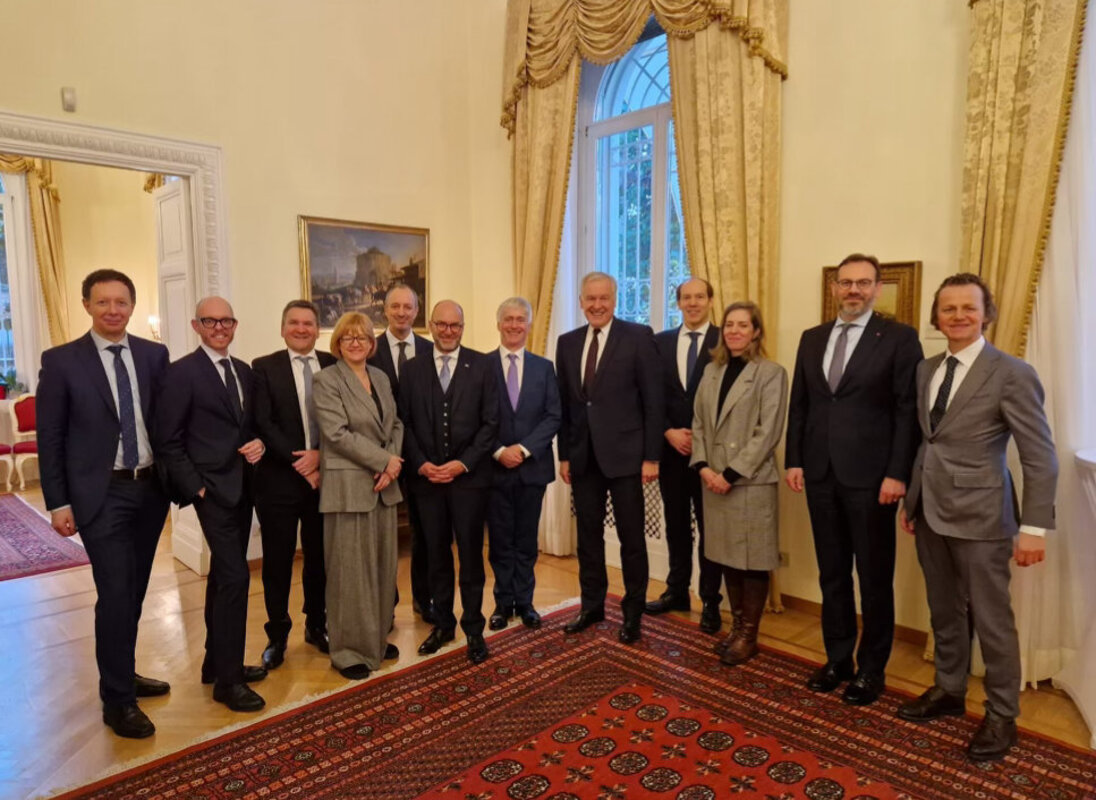
At the ministerial conference for the Southern Hydrogen Corridor in Rome on 21.01.2025, a letter of intent for the development of the Southern Hydrogen Corridor was signed by Austria, Germany, Italy, Algeria and Tunisia. Under the leadership of Italian Foreign Minister Antonio Tajani and Energy Minister Gilberto Pichetto Fratin, high-ranking representatives from politics and business of the five countries discussed the future of the Southern Hydrogen Corridor. Austria was represented by Jürgen Schneider, Head of the Climate and Energy Section at the Federal Ministry for Climate Protection, Environment, Energy, Mobility, Innovation & Technology. Also present were representatives of the HIAA member companies LAT Nitrogen, OMV, RHI Magnesita, voestalpine, VERBUND and Wien Energie, as well as TAG. The meeting underlined the political support as well as the close cooperation of all countries involved in the Southern Hydrogen Corridor. For HIAA, the signing is an important milestone in enabling hydrogen imports to Austria and Germany and thus being able to meet the growing demand for green hydrogen in the long term.
The SoutH2 Corridor project is currently being jointly developed by the European transmission system operators Snam, TAG, Gas Connect Austria and bayernets. The 3,300 km hydrogen pipeline corridor, stretching from North Africa via Italy and Austria to Germany, consists of more than 65% existing repurposed gas infrastructure. With a capacity of 4 million tonnes of H2 per year, the project can contribute 40% to achieving the REPowerEU targets. The project is now to be extended to Tunisia and Algeria. The individual projects along the “SoutH2 Corridor” have been recognised by the European Union as PCI (Projects of Common Interest). PCI projects benefit, among other things, from accelerated approval procedures and access to European funding from the Connecting Europe Facility (CEF).
With the letter of intent, the commitment previously signed by Austria, Germany and Italy to support the project is being extended to Tunisia and Algeria. The five countries expressed their intention to meet every six months at the level of a technical working group in order to monitor and support the implementation of the project. The aim is to develop facilities for the production of green hydrogen and the related infrastructure in order to accelerate the energy transition and contribute to global and European climate goals.